
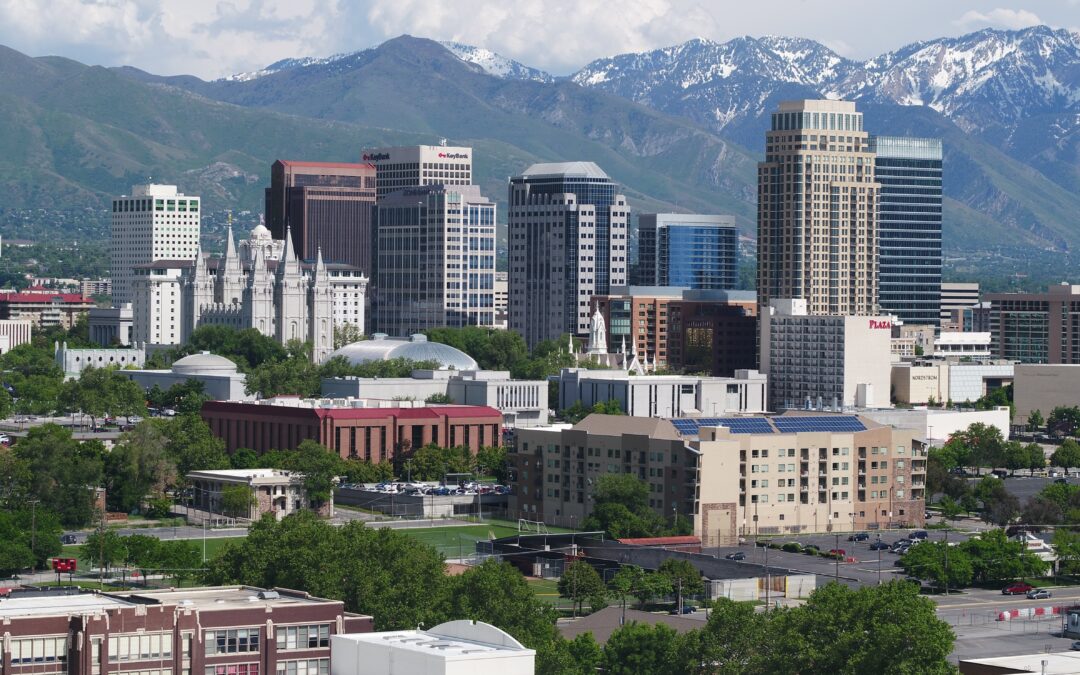
Located in downtown Salt Lake City, Utah, Trolley Square has been a well-loved shopping mall since the 1970s. Following just a few years later, Trolley Corners Theatre opened and was an influential player in what eventually became the famous Sundance Film Festival. While the theater no longer operates there, the Trolley Corners Retail Center has taken its place and carried on its historic name. All three places drew their names from the historic trolley hub which was renovated to house the Trolley Square retail center.
On July 23, 2026, Trolley Square filed a lawsuit against the Trolley Corners Retail Center (“Trolley Corners”), alleging trademark infringement and other related claims against Trolley Corners use of intellectual property. Trolley Square is seeking injunctive relief and $25 million in damages. However, does Trolley Square have strong enough trademark rights to prevent a neighboring property from using the word “TROLLEY” in its name?
TROLLEY is a descriptive term. The word in each name comes from the historic trolley houses which now house Trolley Square and are across the street from Trolley Corners. Descriptive trademarks are not typically enforceable. However, after more than 50 years of continuous use, Trolley Square has likely acquired distinctiveness. This means that the name TROLLEY SQUARE not only describes the historic location but has grown into its own distinct and recognizable brand. It is also possible that the same can be said for Trolley Corners which name has been in use almost as long as Trolley Square.
To be successful in their lawsuit, Trolley Square would need to prove likelihood of confusion. This is a standard which compares the similarity of two trademarks, the strength of a plaintiff’s mark, and the relatedness of their goods and services. Trolley Square’s case would also be strengthened if they are able to prove actual confusion. This could look like a customer believing that the two businesses are affiliated with one another, customers contacting the wrong property, or business opportunities being lost because of confusion. If Trolley Square can show credible, consumer-based confusion, that would bolster its argument that the two names create a likelihood of confusion.
The fact that Trolley Corners has existed for nearly the same amount of time as Trolley Square raises another question regarding laches—a legal defense which argues that the plaintiff waited an unreasonably long time to file their claim and that the delay caused some harm to the defendant. The Trolley Corners Theatre opened in 1974, just two years after Trolley Square opened in 1972. The two businesses existed across the street from each other for decades. When the theater closed in 2004 and was converted into a retail center, the businesses continued to operate next to each other. If Trolley Corners can prove that they suffered harm due to Trolley Square’s delay in action, this could be a potential defense against the allegations in Trolley Square’s claims.
A word such as TROLLEY can begin as a descriptive term and eventually acquire distinctiveness through extensive use. But the longer multiple businesses use the same term, especially in the same geographic area, the more complicated it becomes to enforce usage rights. While Trolley Square may have acquired distinctiveness through their long-term use of the term, Trolley Corners’ equally long use creates an important potential defense based on laches and the scope of Trolley Square’s rights. The overall question isn’t who has been using TROLLEY longer, but what do customers think of when they hear the word and whether the defendant is likely to cause confusion.
Recent Comments